Norman Conquest to 1630
The history of Knaresborough and Mother Shipton's Cave
A castle that sheltered the murderers of an archbishop, and a cave linked to England's most famous prophetess.
Knaresborough grew up around a castle perched dramatically on a rock above a gorge of the River Nidd, first built by the Normans not long after the Conquest and rebuilt in stone over the following centuries by successive kings, including King John and Edward II, who both used it as a royal fortress. Its most notorious moment in the historical record came in 1170, when the four knights who had murdered Archbishop Thomas Becket at Canterbury Cathedral fled north and took sanctuary within its walls, a episode that briefly made an obscure Yorkshire castle infamous across England.
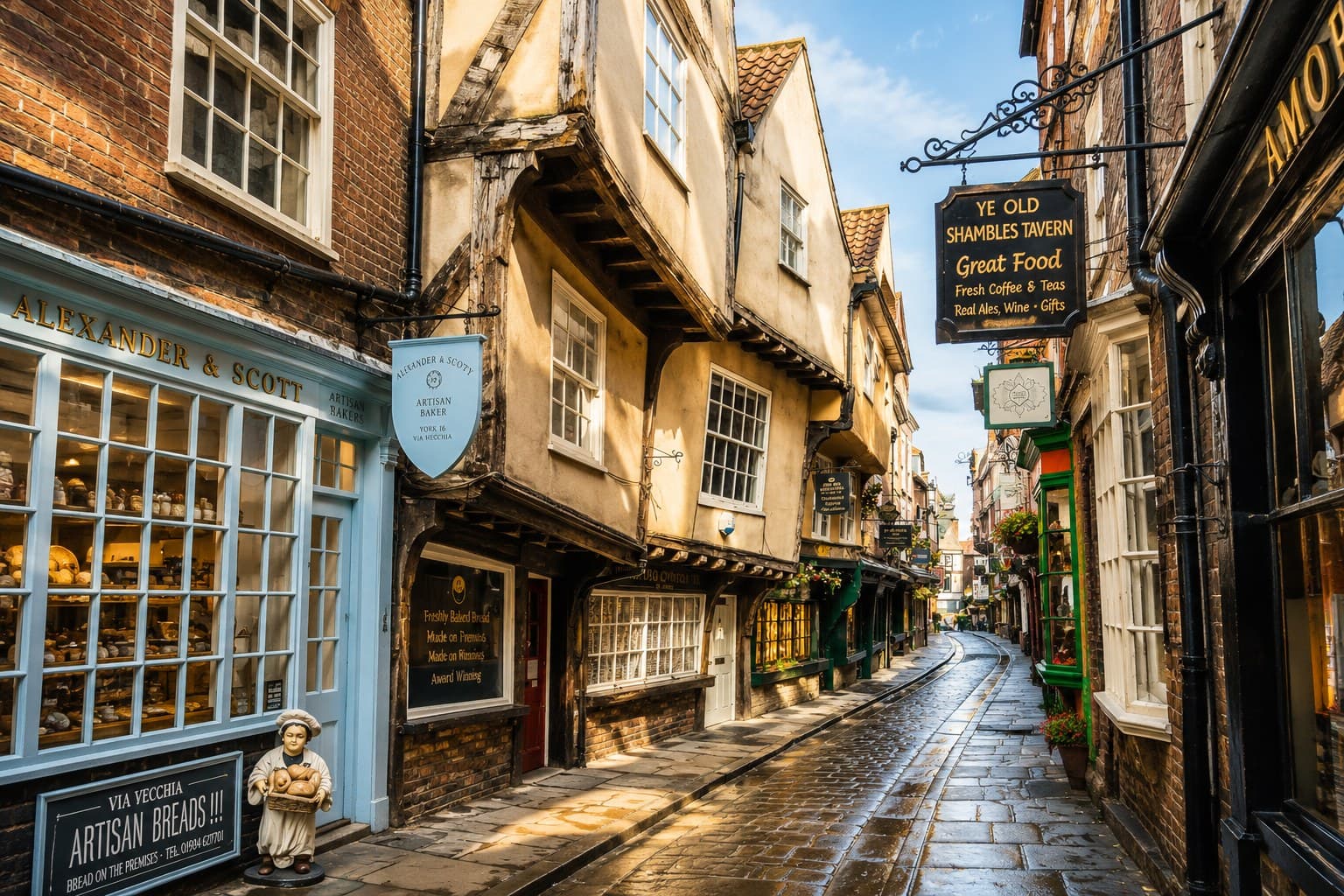
The town that grew below the castle became a prosperous market centre, its steep, narrow streets and houses cut into the cliffside still giving Knaresborough one of the most distinctive townscapes in Yorkshire. The famous railway viaduct crossing the gorge, often mistaken for something far older, was actually built in the Victorian era and quickly became one of the most painted and photographed views in the county.
Just outside the town centre lies a site with an even stranger story. Mother Shipton's Cave is traditionally said to be the birthplace, around 1488, of Ursula Sontheil, who became known in folklore as Mother Shipton, England's most famous prophetess. Collections of prophecies attributed to her, some printed long after her supposed lifetime, claimed to predict events from the dissolution of the monasteries to, in later embellished editions, the invention of cars and telephones, though historians generally treat the bulk of these as later inventions added to a much simpler original legend.
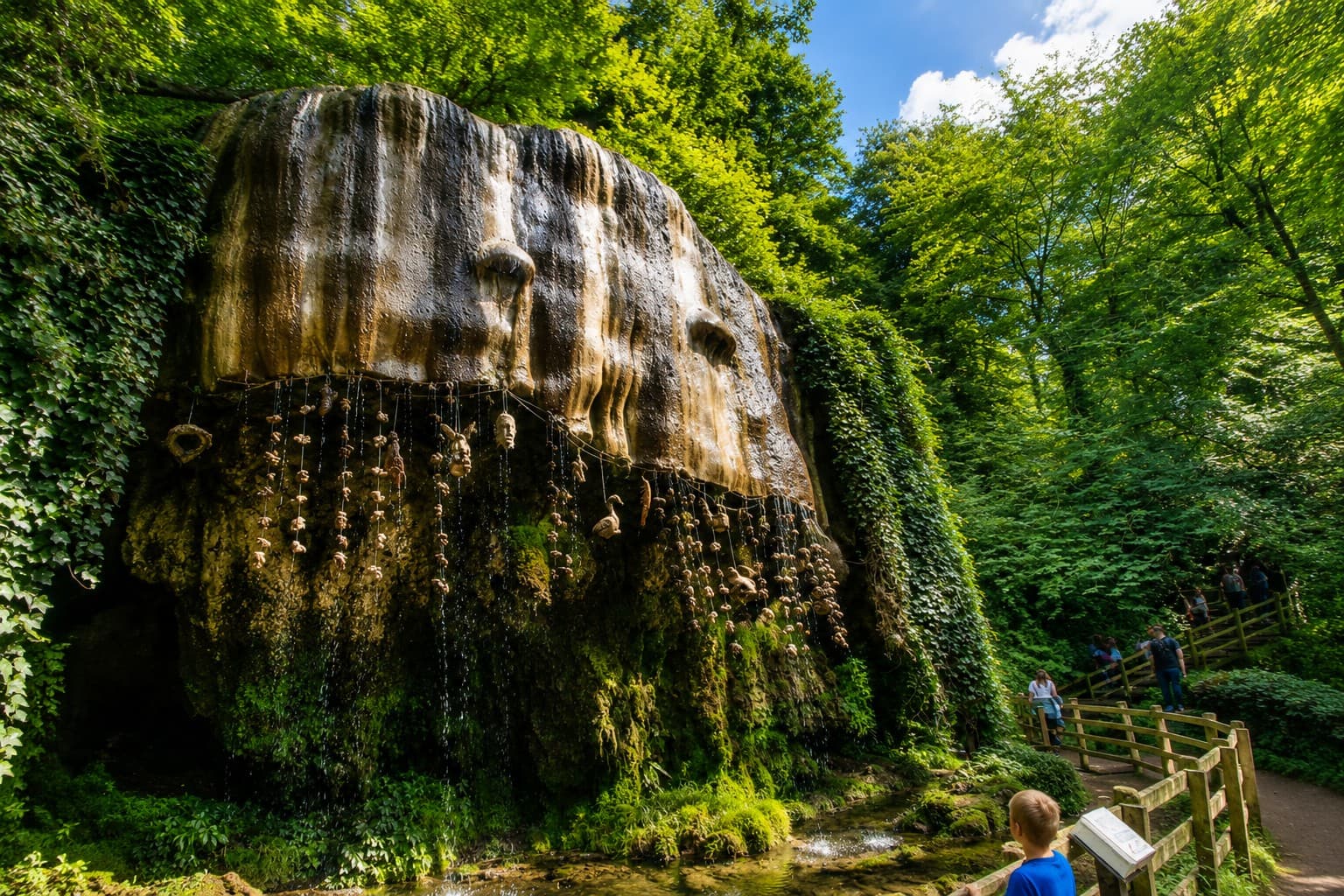
Beside the cave is the Petrifying Well, a dripping spring so heavily mineralised that anything left hanging beneath it slowly turns to stone, encrusted with a hard mineral coating over a period of weeks. The well and cave were enclosed and opened to paying visitors in 1630 under a royal licence, making the attraction, by its own claim, the oldest in England still operating in roughly its original form, almost four centuries before anyone thought to formally call such places tourist attractions.
SEE IT FOR YOURSELF
This history comes alive on the ground. Plan a visit with opening times, directions and what to see.