1571 to today
The history of Harrogate as a spa town
How a chance discovery of a sulphur spring grew into one of the most fashionable resort towns in Georgian and Victorian England.
Harrogate owes its entire existence as a town to water that smells distinctly unpleasant. In 1571, a local man named William Slingsby discovered a spring at what became known as the Tewit Well, and recognised that its taste and mineral content resembled the famous medicinal springs of Spa in Belgium, the town that gave the English language the word "spa" itself. Over the following two centuries, dozens more mineral springs were found across the area, eventually totalling more than eighty, an unusually dense concentration of sulphur and chalybeate (iron-rich) waters in one small area.
By the 18th century, Harrogate had become a fashionable destination for those who could afford to "take the waters", believed to cure everything from gout to skin complaints. Visitors of wealth and status travelled from across Britain to drink and bathe in the various wells, and the town grew rapidly around this trade, with grand hotels, assembly rooms and pleasure gardens springing up to serve them. The Royal Pump Room was built in 1842 directly over the strongest sulphur well to formalise and dignify what had previously been a fairly rustic operation of pumping foul-smelling water for paying visitors.
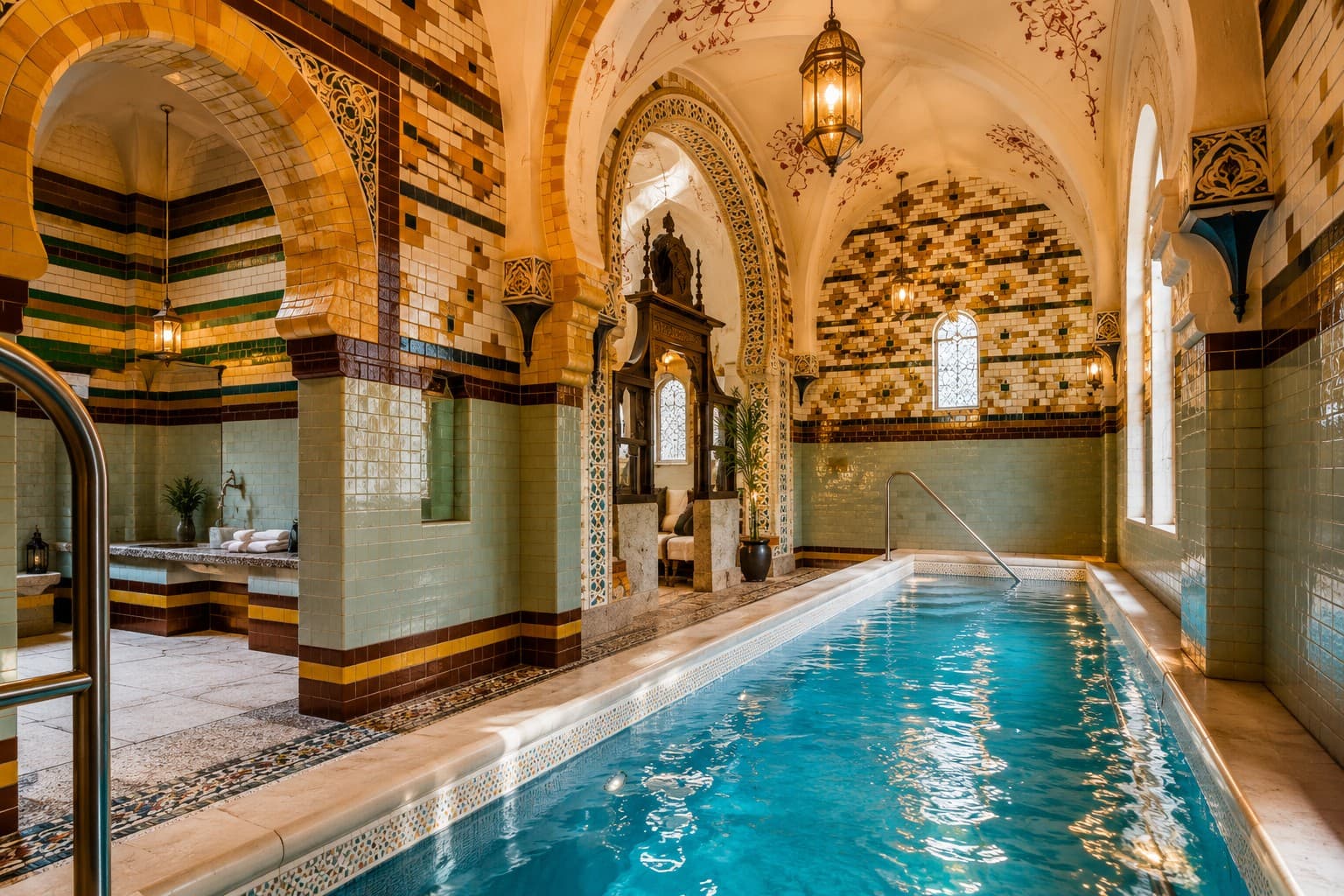
Harrogate's spa reputation reached its peak in the late Victorian and Edwardian periods, when the town was drawing royalty, aristocracy and wealthy visitors from across Europe. It was during this golden age, in 1897, that the Turkish Baths were built, an elaborate Moorish-style bathhouse with hot rooms, a plunge pool and richly tiled and painted interiors, designed to give Harrogate's spa offering the same exotic, fashionable Islamic-revival style that was popular in bathhouses across Europe at the time.
The medicinal craze for spa waters faded through the 20th century as modern medicine advanced, but Harrogate had by then built such a strong identity around elegance, hospitality and spacious Georgian and Victorian architecture that it thrived anyway, reinventing itself as a conference and exhibition town. The Royal Pump Room is now a museum telling the story of the wells, and remarkably, the Turkish Baths have never stopped operating, still functioning today as a working spa more than a century after they opened.
SEE IT FOR YOURSELF
This history comes alive on the ground. Plan a visit with opening times, directions and what to see.