10 MINUTES FROM PATELEY BRIDGE
Brimham Rocks
Fifty acres of extraordinary millstone grit formations balanced on a hilltop above Nidderdale. Brimham Rocks is one of the great natural wonders of Yorkshire - a landscape shaped by 300 million years of weathering into shapes that look designed but are entirely natural. Ten minutes from Pateley Bridge and free to explore on foot.
Visit information
- Location
- Brimham Rocks, Summerbridge, Harrogate HG3 4DW
- From Pateley Bridge
- 10 minutes via Glasshouses and Summerbridge
- Open
- Rocks open all year, daily. Visitor centre and car park have seasonal hours - see nationaltrust.org.uk/brimham-rocks
- Entry
- Car park charge. National Trust members free. Rocks themselves are free to explore on foot from the surrounding roads.
- Dogs
- Dogs welcome on leads throughout
- Owner
- National Trust
In pictures
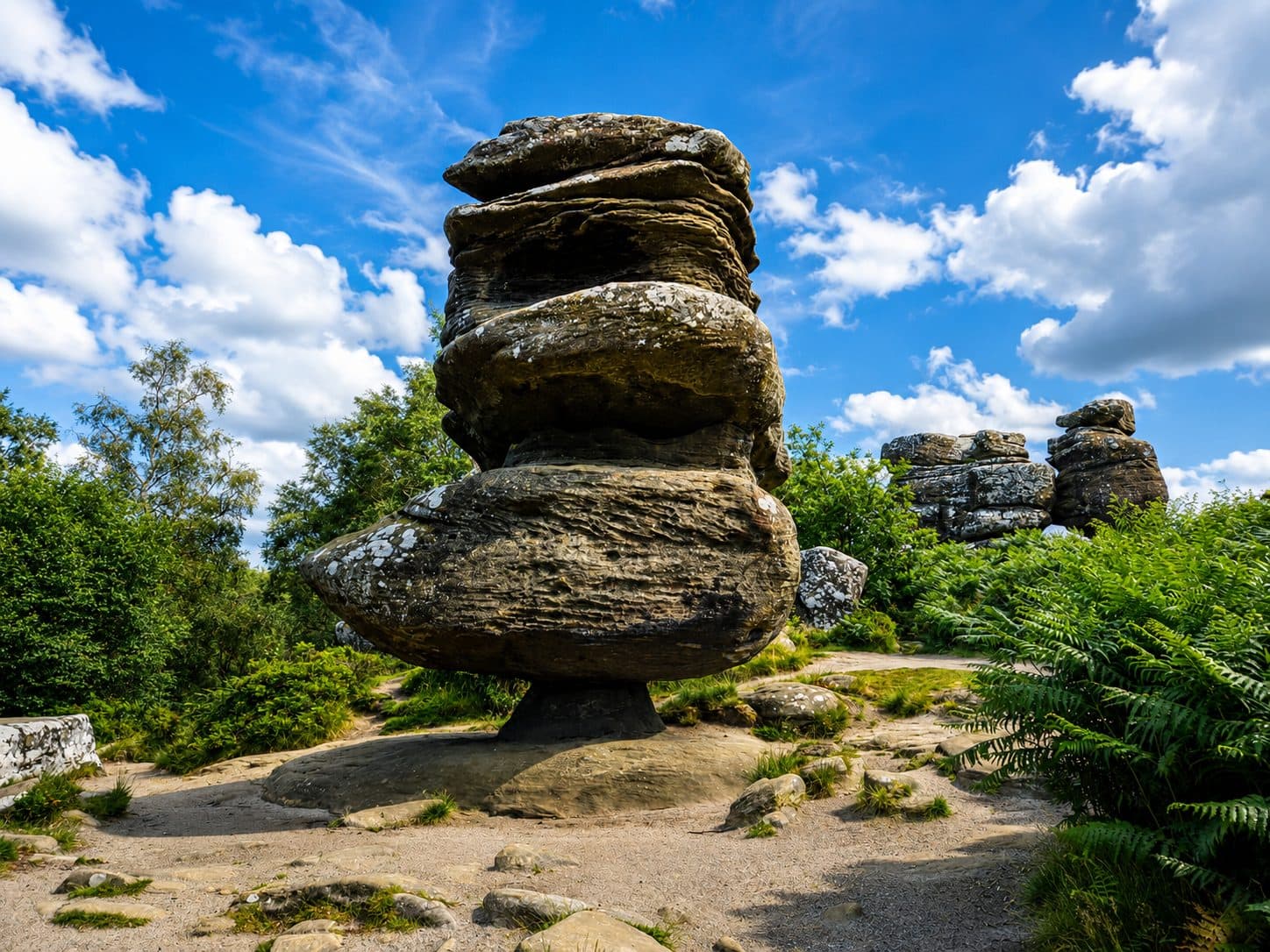
One of the balancing rocks
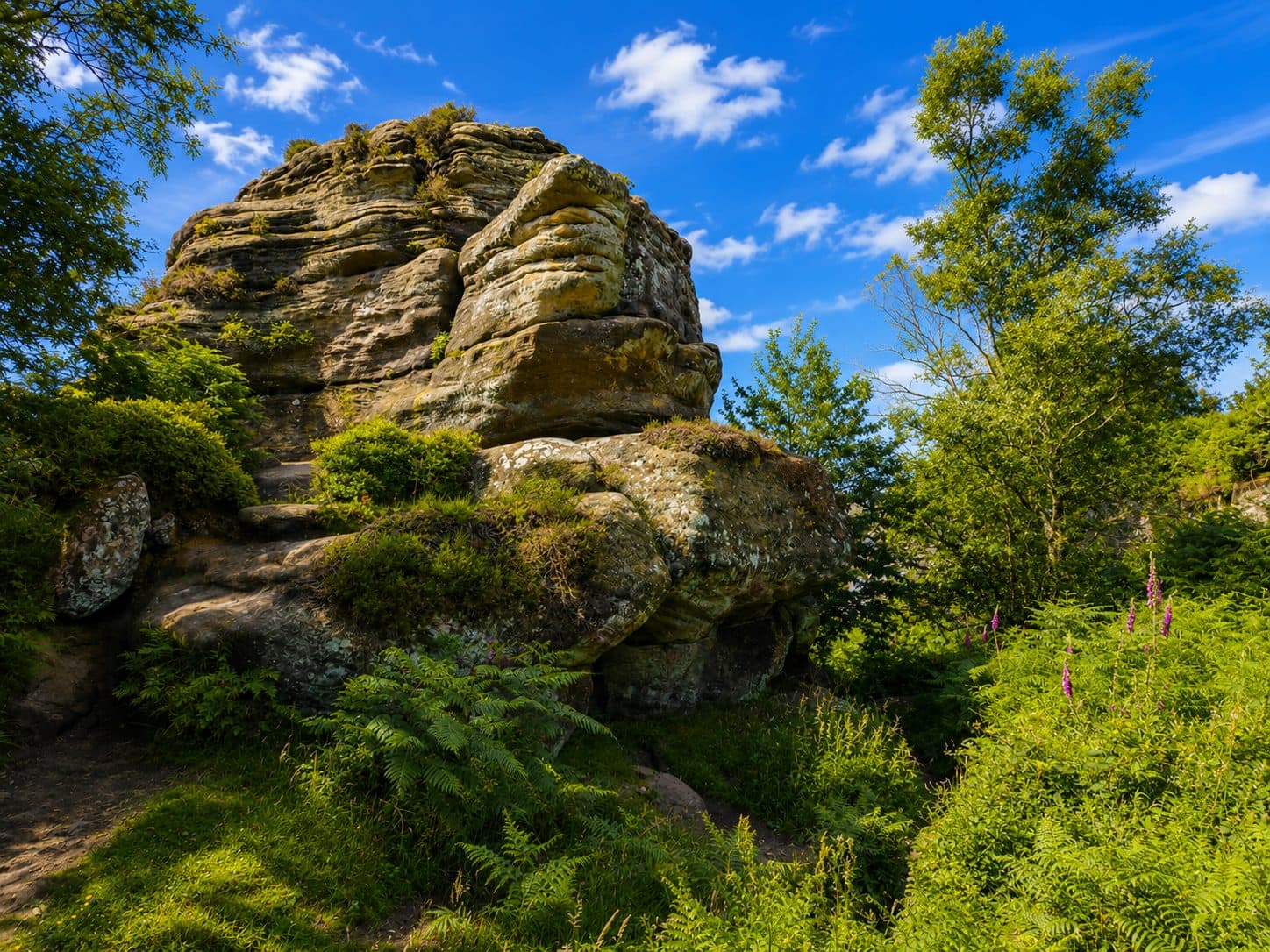
Foxgloves below the rocks
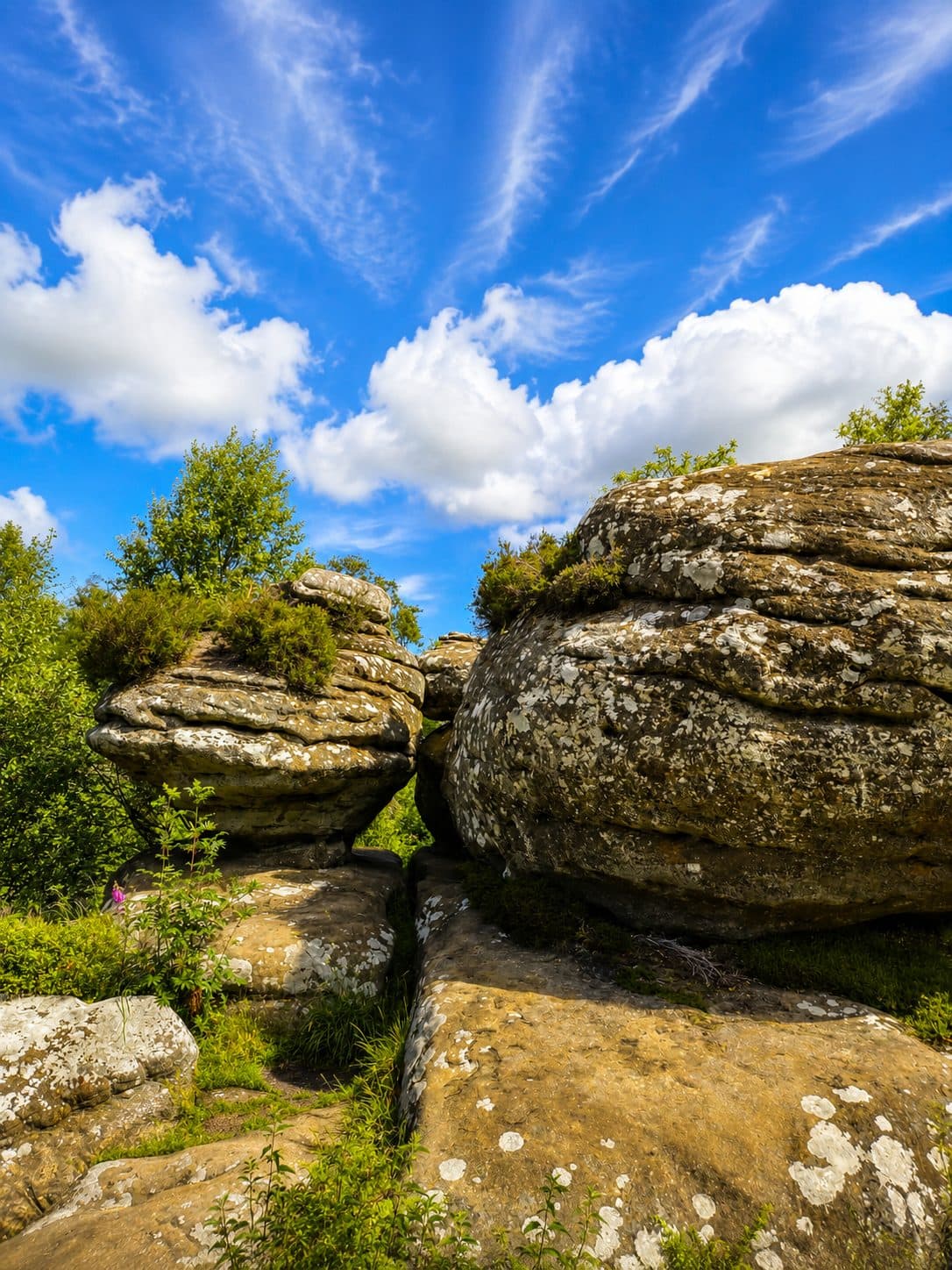
Looking up at the formations
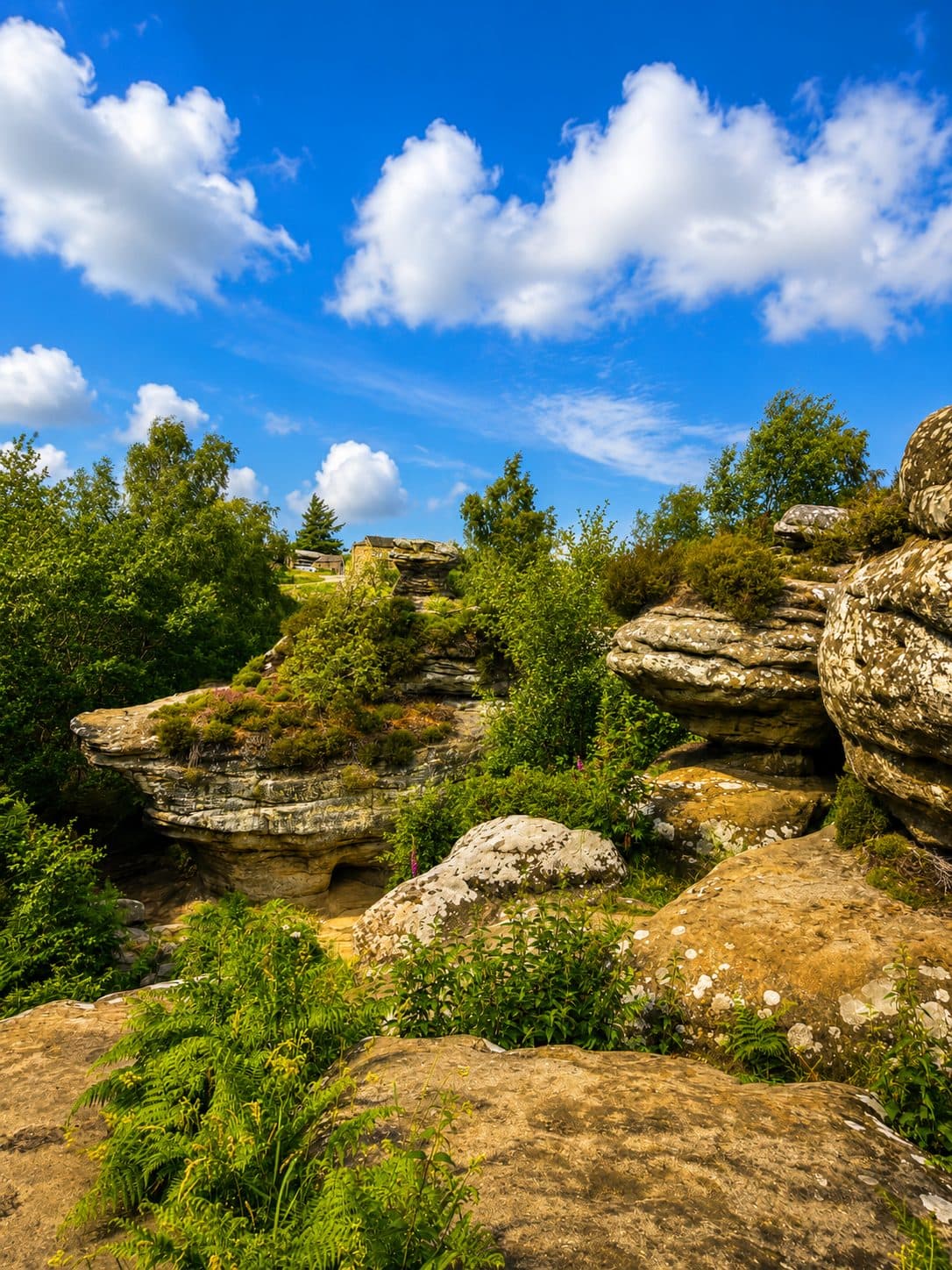
Towards the visitor centre
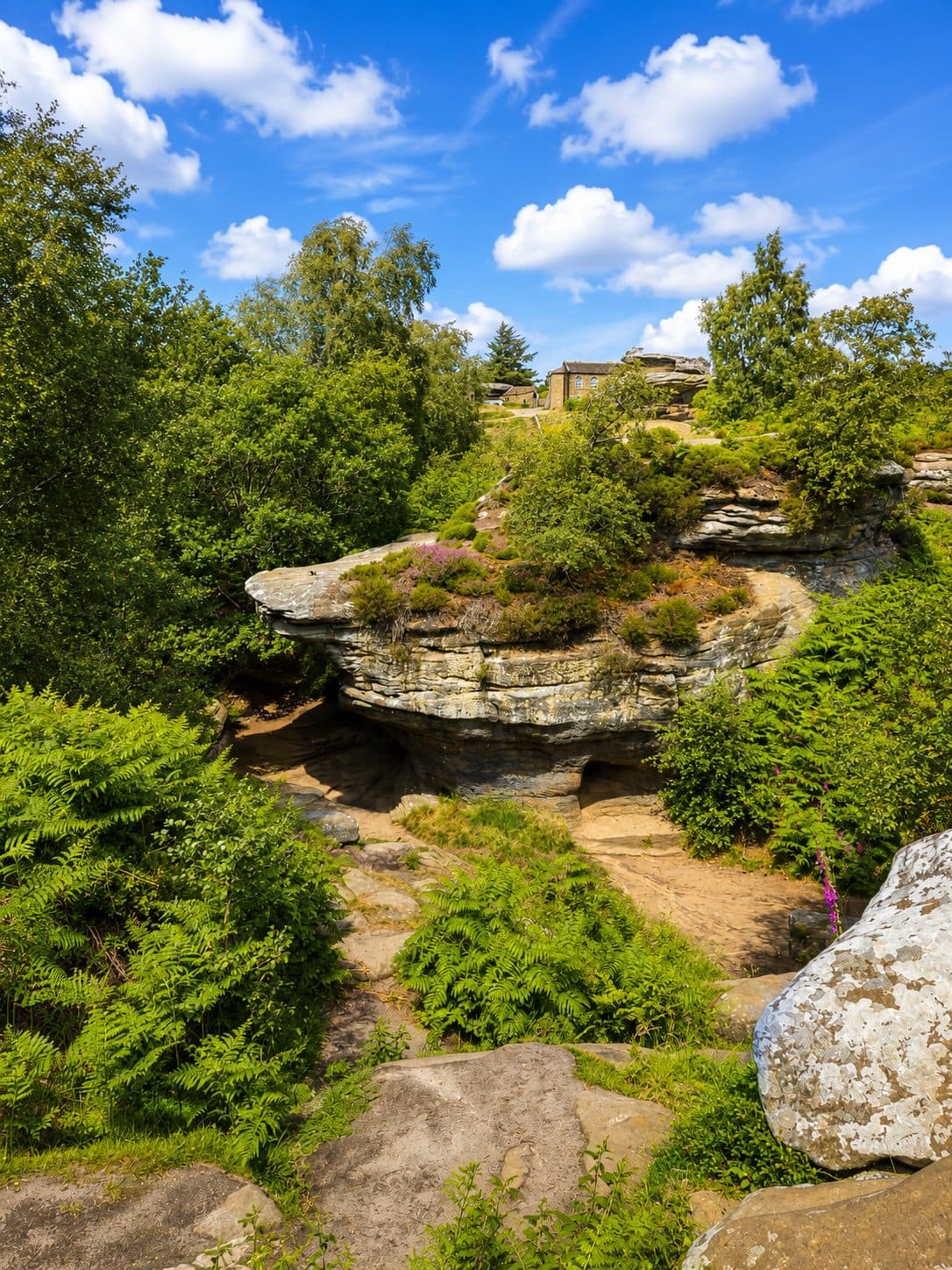
Threading between the rocks
How they were formed
The rocks are millstone grit - a coarse sandstone formed from sediment deposited 300 million years ago when Yorkshire lay close to the equator. Over millions of years, repeated cycles of freezing and thawing, wind erosion and rain worked on the rock, exploiting weak points and creating the extraordinary shapes visible today.
The process is called differential weathering. The rock erodes at different rates depending on its hardness and the direction of the prevailing winds and rain. Softer layers are eaten away faster, leaving harder caps balanced on thinner pedestals. The results look impossible but are entirely natural.
Early visitors, including Victorians who popularised the site in the 19th century, believed the rocks were the work of ancient druids. The shapes that seemed deliberately carved - the idol, the anvil, the dancing bear - seemed too precise to be accidental. The geology is in fact more interesting than the myth.
Exploring the rocks
There are no set paths across the moor - visitors roam freely between the formations. The main cluster of rocks is easily reached from the National Trust car park. Allow at least 90 minutes to explore properly, more if you want to reach the outer edges of the moor.
Children love Brimham Rocks - the formations create natural tunnels, caves and climbing opportunities that are hard to resist. The National Trust has guidance about where climbing is permitted and where the rocks need protection, so check the signage on site.
The views from the top of the main rock area extend across Nidderdale towards Pateley Bridge and Gouthwaite Reservoir, with the moors of upper Nidderdale beyond. On a clear day you can see far into the dale.
Named formations to find
The Idol
The most famous of the Brimham formations - a huge balanced rock sitting on a pinpoint base, apparently defying gravity. A classic viewpoint and the most photographed rock on the moor.
The Dancing Bear
A formation that genuinely resembles a bear standing upright when seen from the right angle. Children invariably find this one, and it is a good test of the imagination of different members of a group.
The Druids Writing Desk
A flat-topped rock with an overhanging ledge that creates a natural shelter and desk surface. The Victorians who named many of the rocks had a vivid imagination. This one rewards approaching from different angles.
The Sphinx
One of the larger formation groups, a series of rocks that together create the impression of a recumbent figure. Best seen from the path on the south side of the moor.
The Blacksmith's Anvil
A precisely shaped rock formation that looks exactly as named. One of the more striking examples of the way wind and water have worked on the gritstone over 300 million years.
WHEN TO VISIT
Good in all weathers
Summer
The heather turns the moor purple in July and August, with the grey rocks rising above a sea of purple. Spectacular. The busiest time of year - arrive early at weekends.
Autumn
The bracken turns golden and the views across the dale are at their clearest. Fewer visitors than summer. The light on clear October mornings is exceptional.
Winter
After snow or frost the rocks are extraordinary - ice crystals on the gritstone, white moor, grey sky. Park carefully and wear appropriate footwear. The site is free and genuinely worth the effort.
Spring
Curlews return to the moor in March and April, filling the air above the rocks with their bubbling call. One of the great wildlife sounds of the northern uplands, and reliably present at Brimham.
Combine with a walk from Pateley Bridge
Brimham Rocks is 10 minutes from Pateley Bridge by car, or reachable on foot via the lanes and paths above Glasshouses - a 4-mile round trip with good views all the way. One of the best days out from the town.
SELF-GUIDED AUDIO TOUR
Make Brimham Rocks part of a full Nidderdale day
The Nidderdale Driving Tour app links Brimham Rocks with Fountains Abbey, Pateley Bridge and Coldstones Cut, with narration playing automatically as you go.