1132 onwards
The history of Rievaulx Abbey
Founded the same year as Fountains, and home to one of the great mystical writers of the medieval Church.
Rievaulx Abbey was founded in 1132, the very same year as Fountains, and the two abbeys grew up almost as siblings within the new Cistercian order spreading across England from its French roots at Clairvaux. Rievaulx was established by Walter Espec, a powerful Norman baron, on land beside the River Rye in a steep, secluded valley near Helmsley. Monks were sent directly from Clairvaux itself under the personal direction of Bernard of Clairvaux, making Rievaulx one of the very first Cistercian houses on English soil.
The abbey reached its intellectual and spiritual peak under Aelred of Rievaulx, who became abbot in 1147. Aelred was a significant medieval writer, producing works on friendship and contemplative life that are still studied today, and under his leadership the community grew to several hundred monks and lay brothers, an extraordinary size for a 12th-century monastery in a remote valley. As at Fountains, that growth was funded largely by wool, with vast sheep granges worked by lay brothers across the surrounding moors.
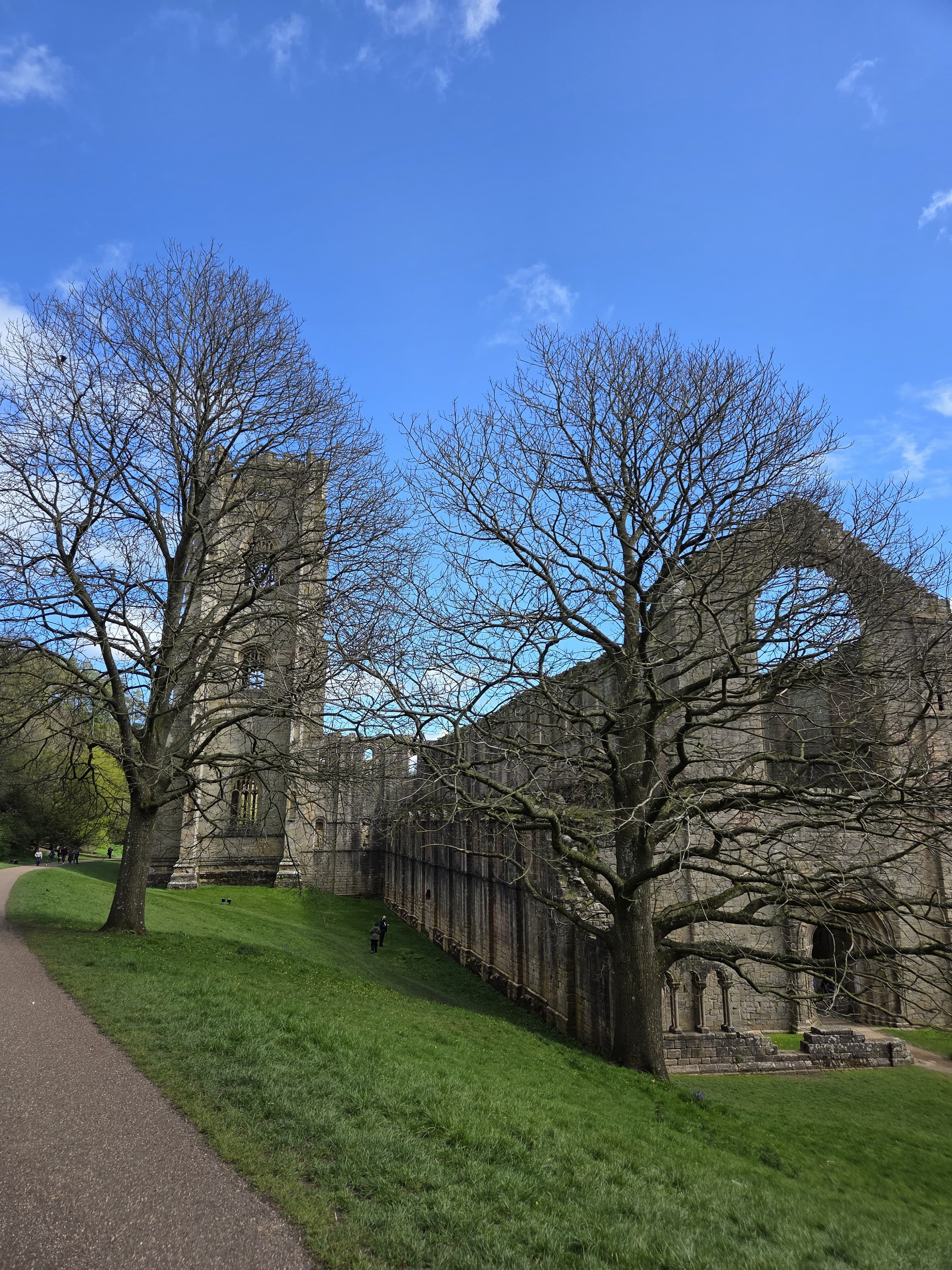
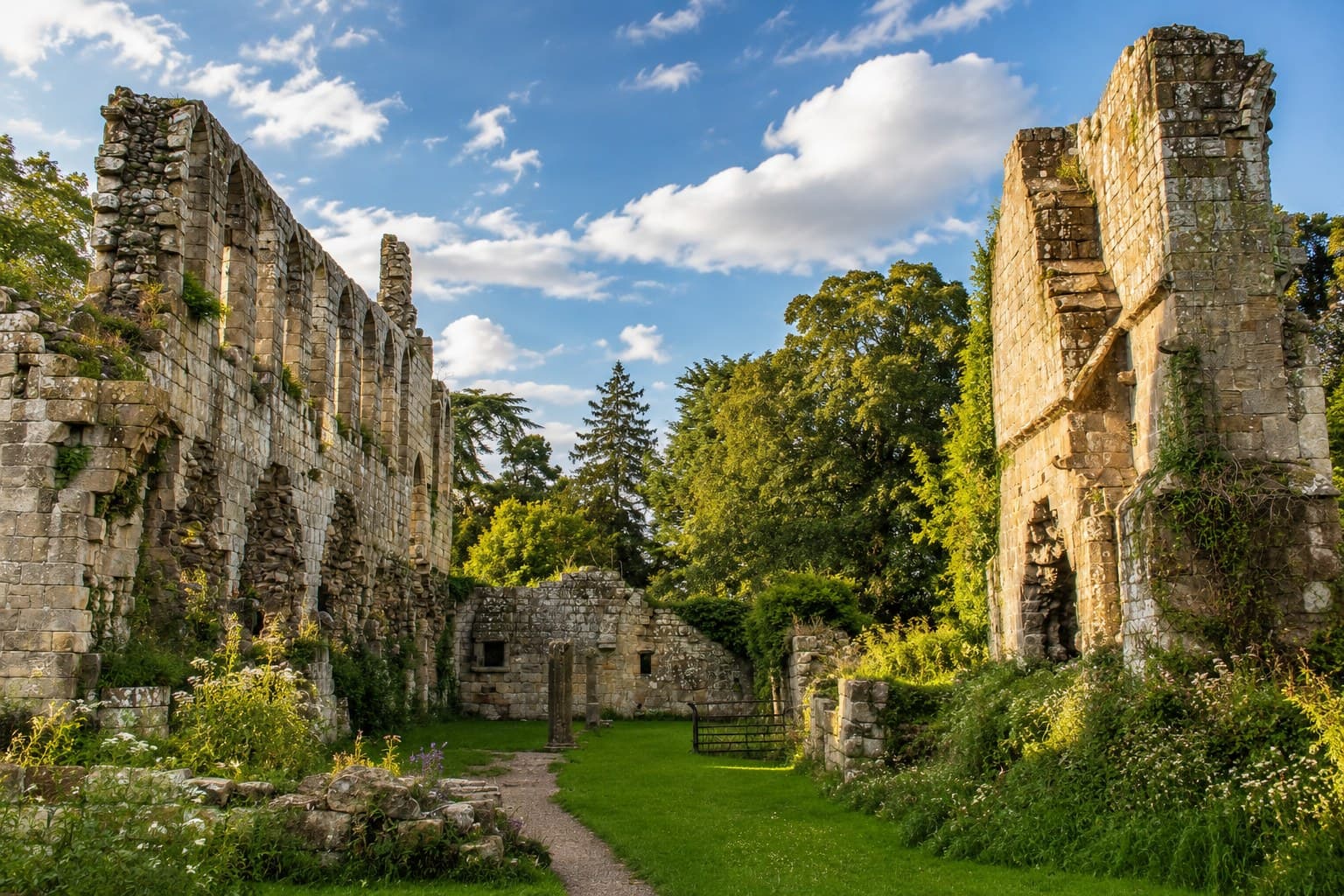
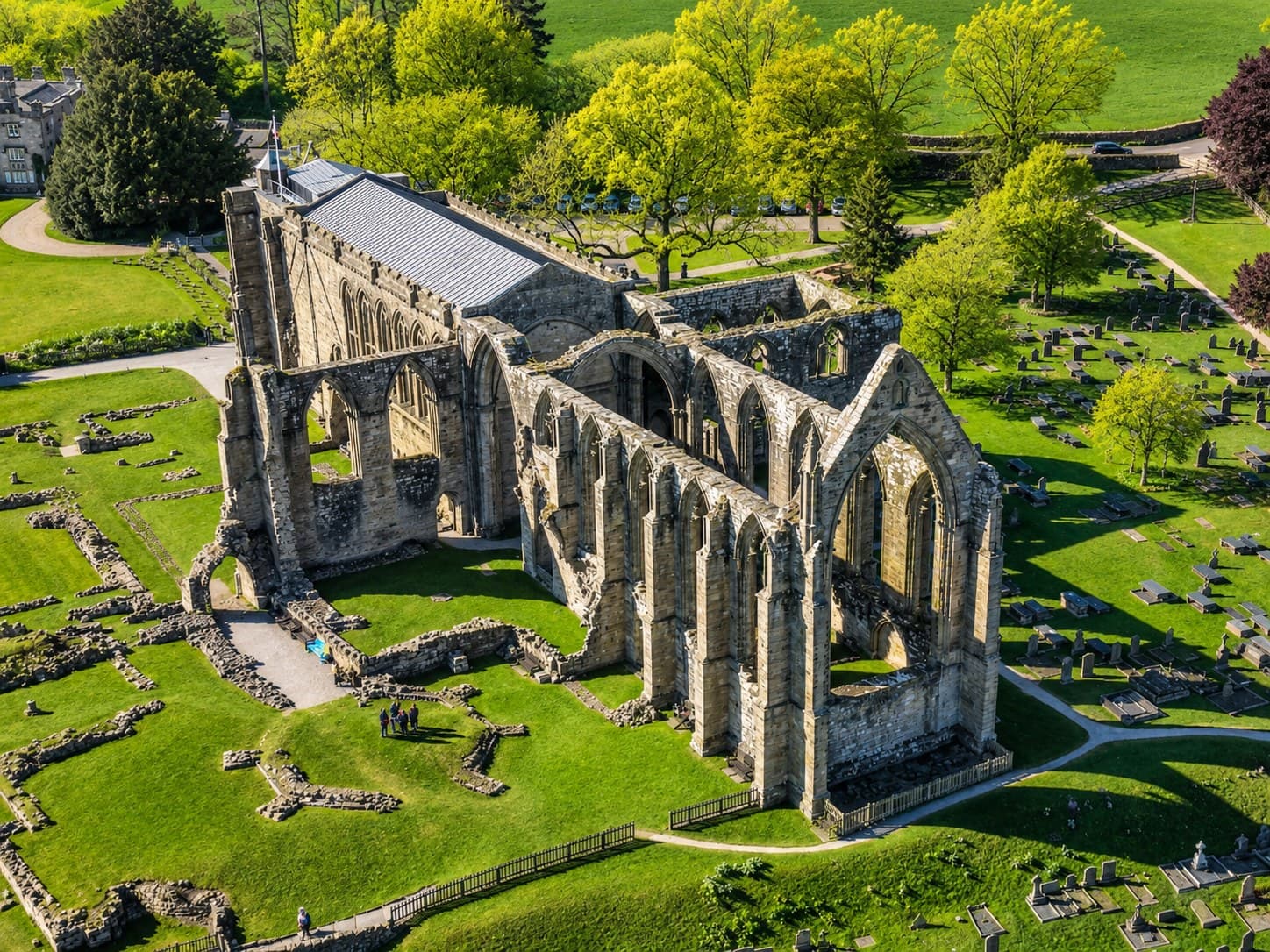
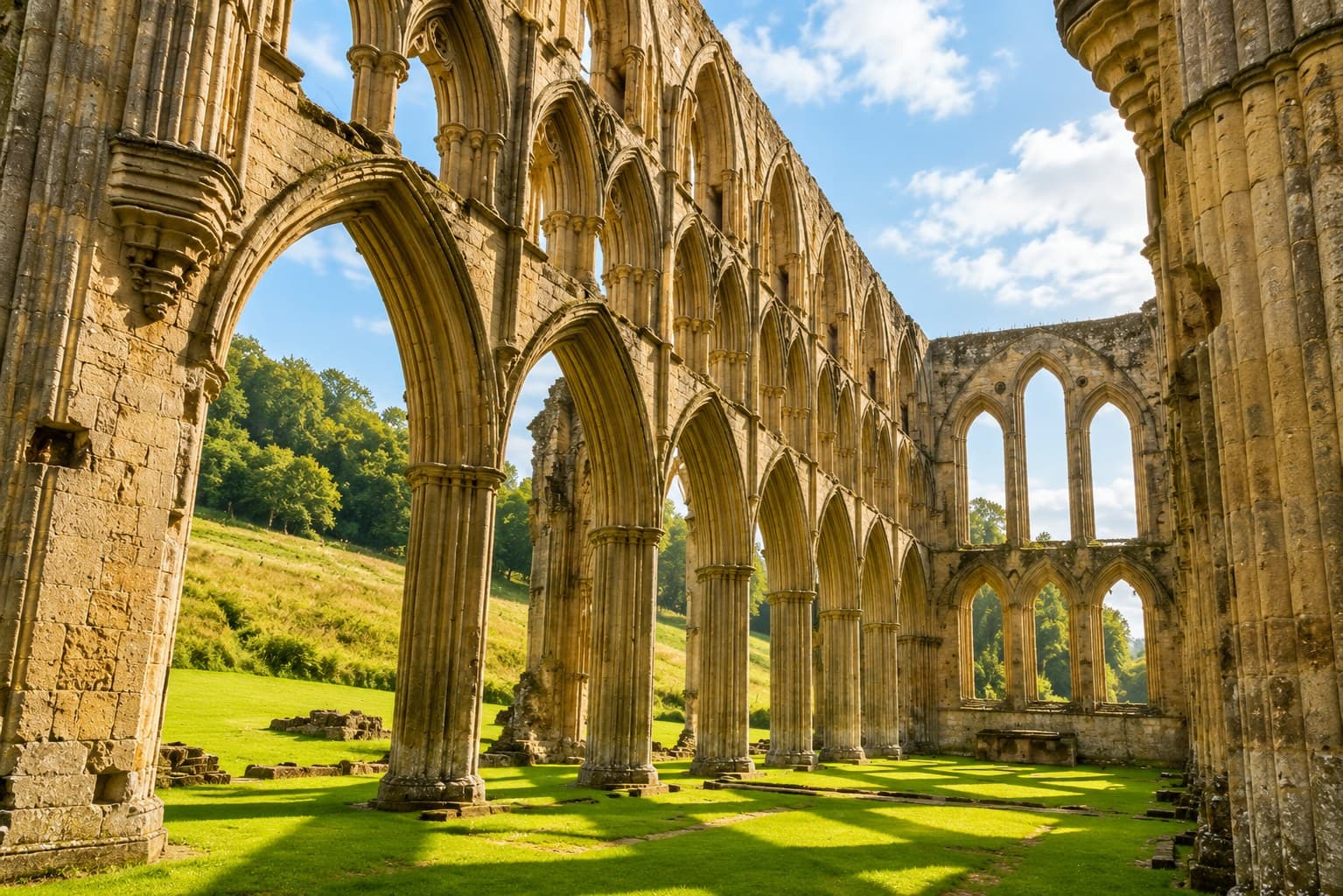
Rievaulx suffered the same fate as every other English monastery when Henry VIII dissolved the religious houses in 1538. The buildings were stripped and abandoned, and the site passed into private hands, eventually becoming part of the Duncombe Park estate. Unlike Fountains, Rievaulx was never deliberately landscaped as a garden feature, and its ruins kept a wilder, more melancholic character that appealed strongly to artists and poets of the Romantic era in the 18th and 19th centuries, when picturesque ruins became fashionable subjects for paintings and verse.
Today the abbey is managed by English Heritage, with an on-site museum explaining both the monastic life of the community and the later industrial history of the valley, which became an early centre of iron working using water power from the Rye. The ruins remain among the most atmospheric of any English monastery, set in a landscape that has changed remarkably little since Aelred's time.
SEE IT FOR YOURSELF
This history comes alive on the ground. Plan a visit with opening times, directions and what to see.