1132 to 1539, and beyond
The history of Fountains Abbey
From thirteen monks surviving a winter in the wild to one of the wealthiest abbeys in England, and then a Georgian water garden.
Fountains Abbey began with a small, desperate breakaway. In 1132, thirteen Benedictine monks left St Mary's Abbey in York after a dispute over the strictness of their religious life, and were given a patch of wild, wooded valley beside the River Skell by the Archbishop of York. They survived their first winter there in conditions so harsh that, according to the abbey's own chronicles, they nearly starved. The following year they applied to join the reformed Cistercian order, founded a generation earlier at Clairvaux in France under the influential Bernard of Clairvaux, and Fountains became one of the first Cistercian houses in England.
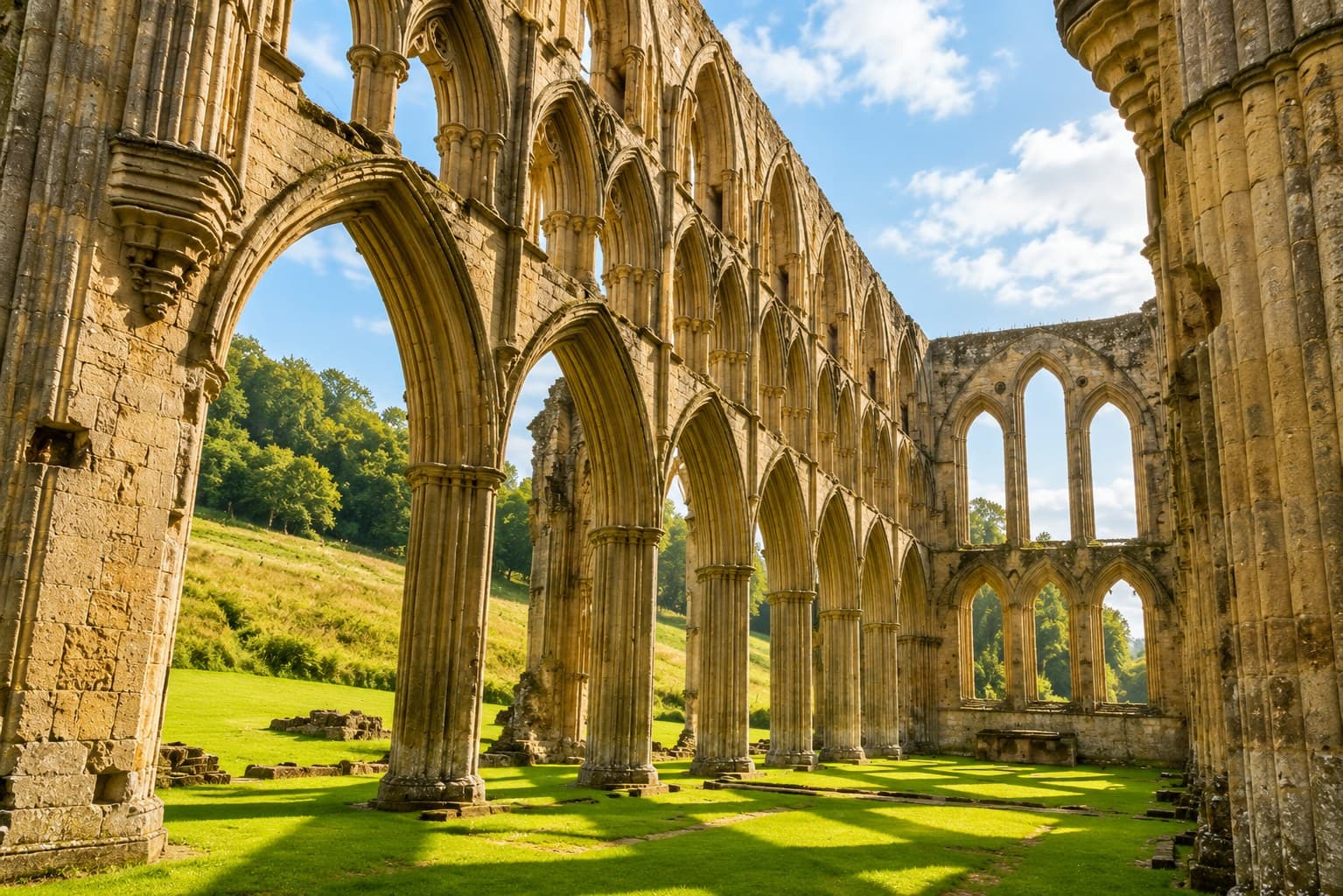
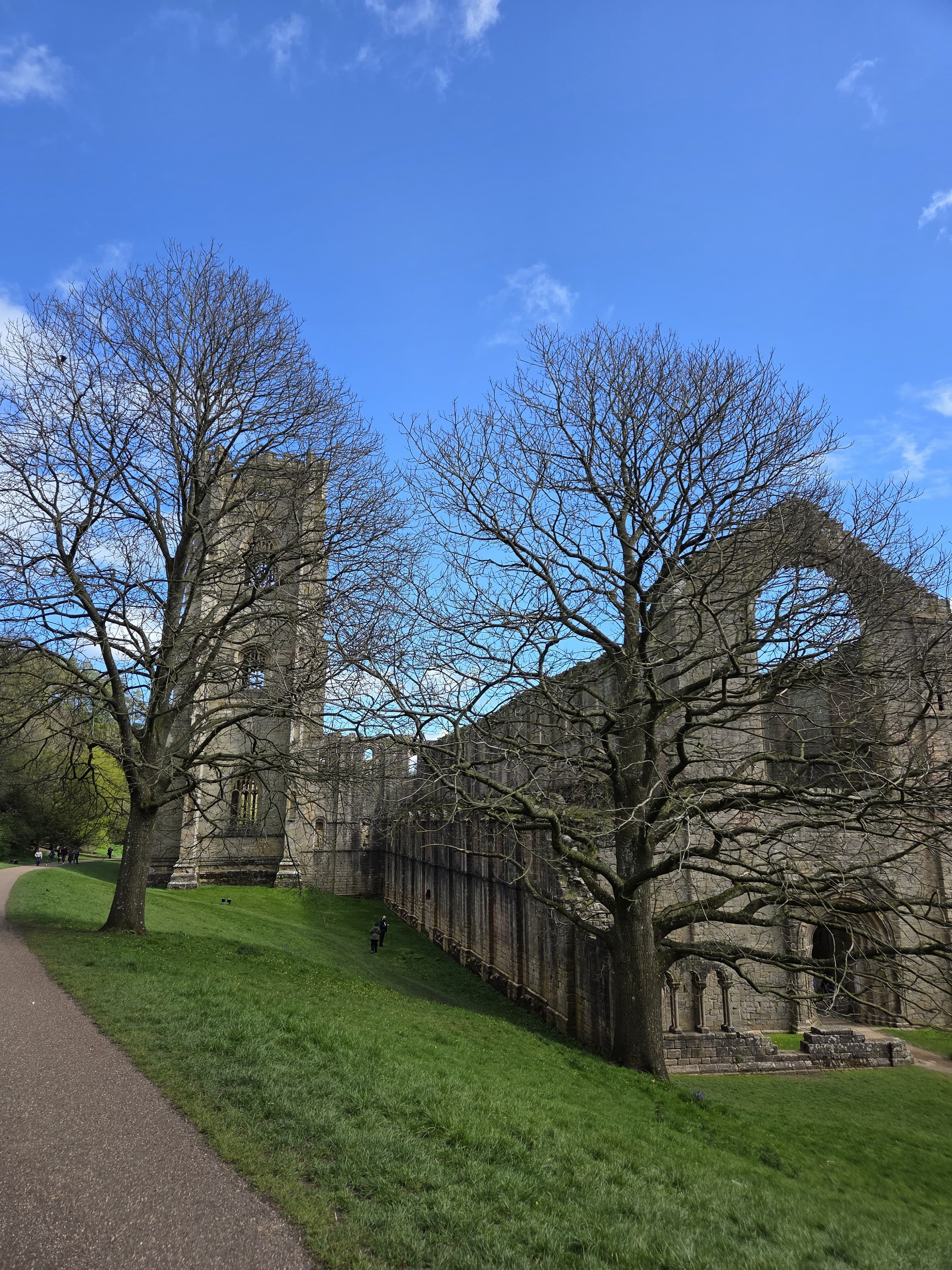
What followed was two centuries of extraordinary growth. The Cistercians built their wealth on sheep farming, running vast flocks across granges that stretched far beyond the abbey itself, including land high into Nidderdale. Wool from Fountains was exported across Europe, and the abbey became one of the richest religious houses in the country, funding an ambitious building programme that included the soaring nave whose Norman arches still stand roofless today, and the 160-foot tower added by Abbot Marmaduke Huby around 1500, intended as a visible statement of the abbey's power across the valley.
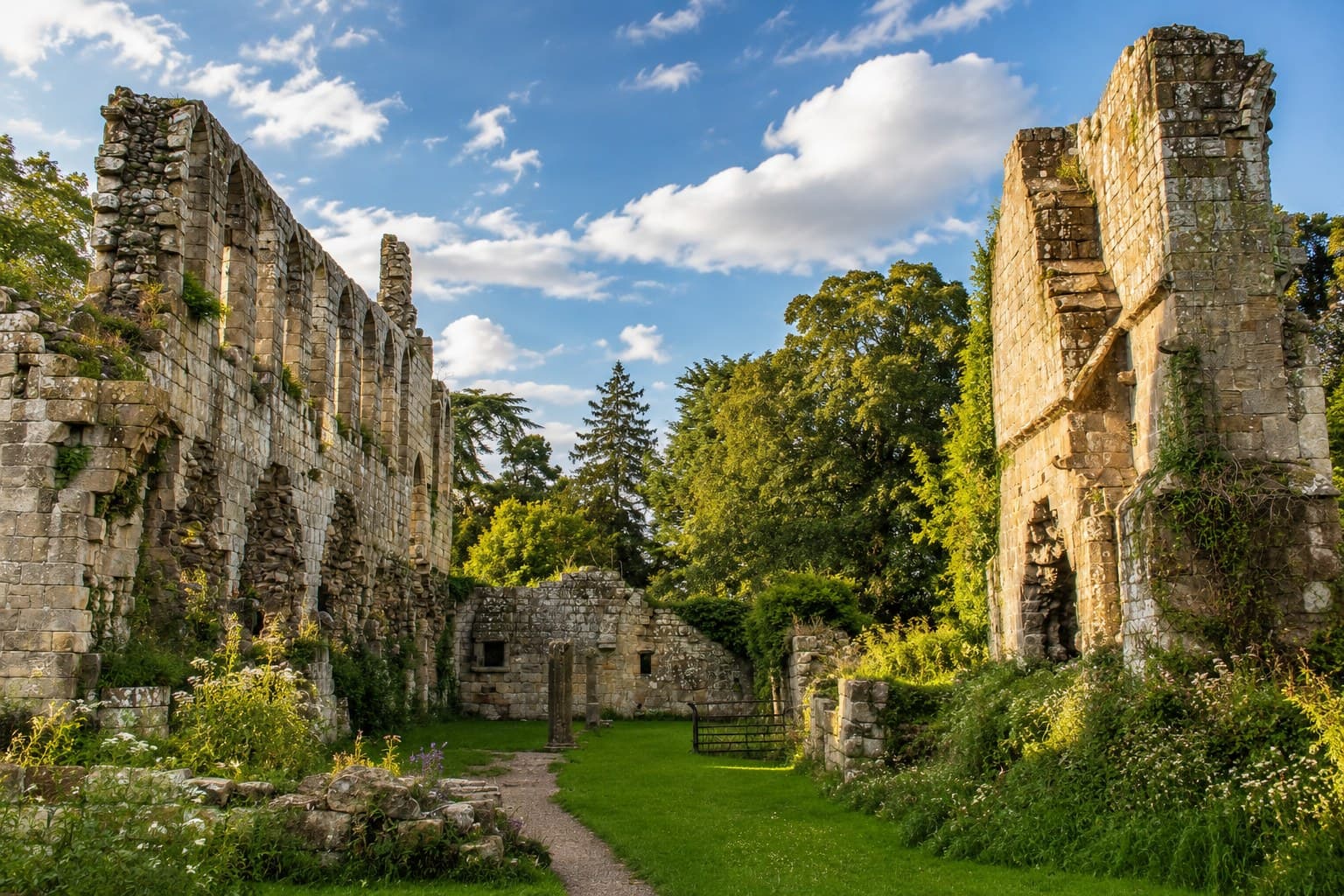
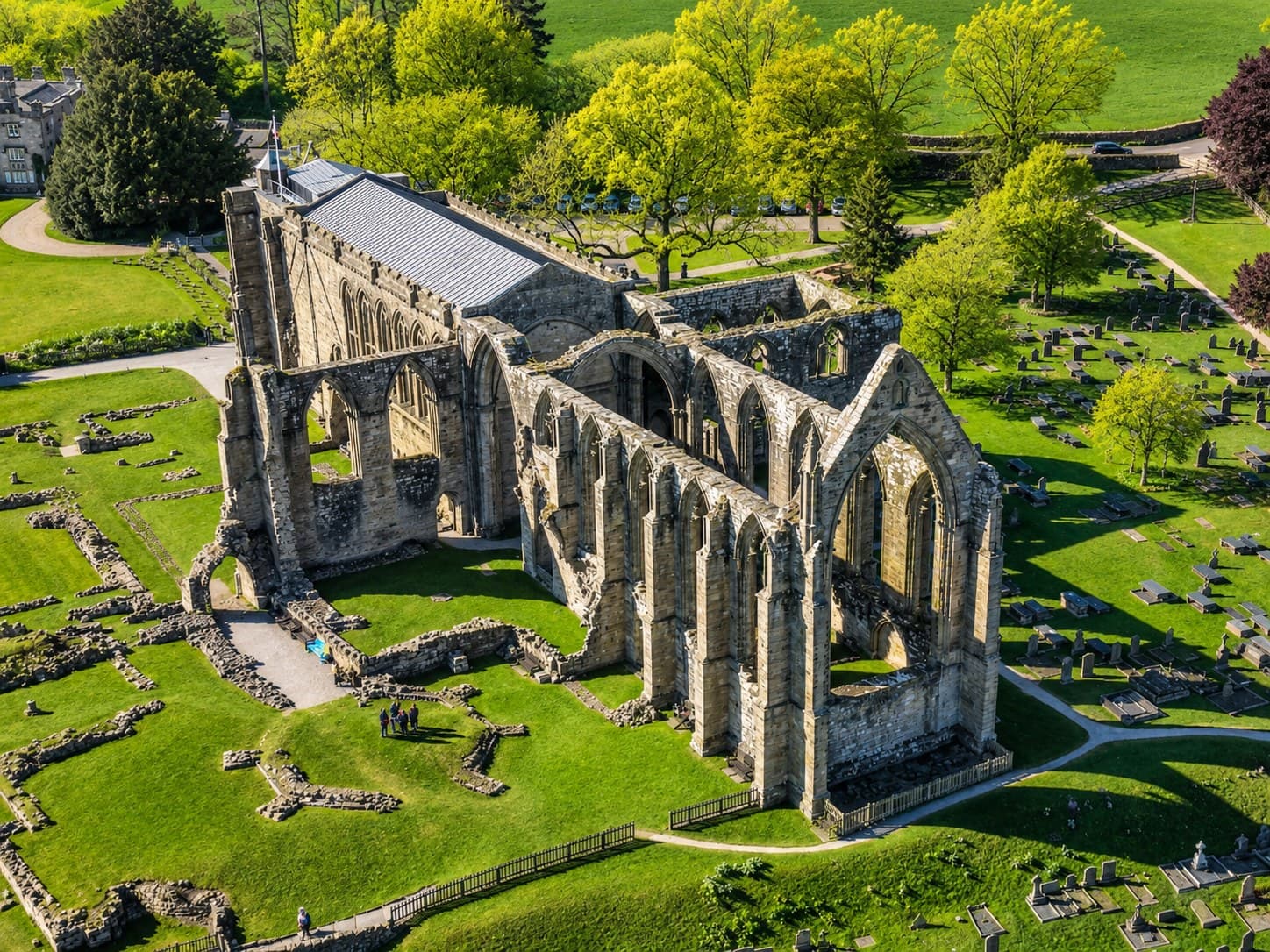
That power ended abruptly in 1539, when Henry VIII's Dissolution of the Monasteries reached Fountains. The abbey was stripped of its lead, glass and valuables and left to fall into ruin, its land sold off to the Gresham family and later passed through several private owners. For nearly two centuries the ruins stood largely untouched, slowly being absorbed back into the landscape, while the surrounding estate passed into different hands.
The abbey's second life began in the early 18th century, when the neighbouring Studley Royal estate was developed by John Aislabie, a disgraced politician who had lost his position over the South Sea Bubble financial scandal of 1720 and retreated to Yorkshire to build one of the finest formal water gardens in Europe. His son William later bought the abbey ruins themselves, deliberately framing them as a picturesque eye-catcher at the end of the garden's carefully engineered views, a piece of landscape theatre that drew wealthy visitors throughout the Georgian and Victorian periods.
The estate eventually passed to the National Trust in 1983, and in 1986 Fountains Abbey and Studley Royal Water Garden together were inscribed as a UNESCO World Heritage Site, recognised as an outstanding combination of medieval monastic remains and 18th-century landscape design. Today it is one of the most visited heritage sites in the north of England, and one of the largest and best-preserved ruined monasteries anywhere in the country.
SEE IT FOR YOURSELF
This history comes alive on the ground. Plan a visit with opening times, directions and what to see.