1379 to today
The history of Bolton Castle
Built by a Lord Chancellor of England, and later the prison of a queen.
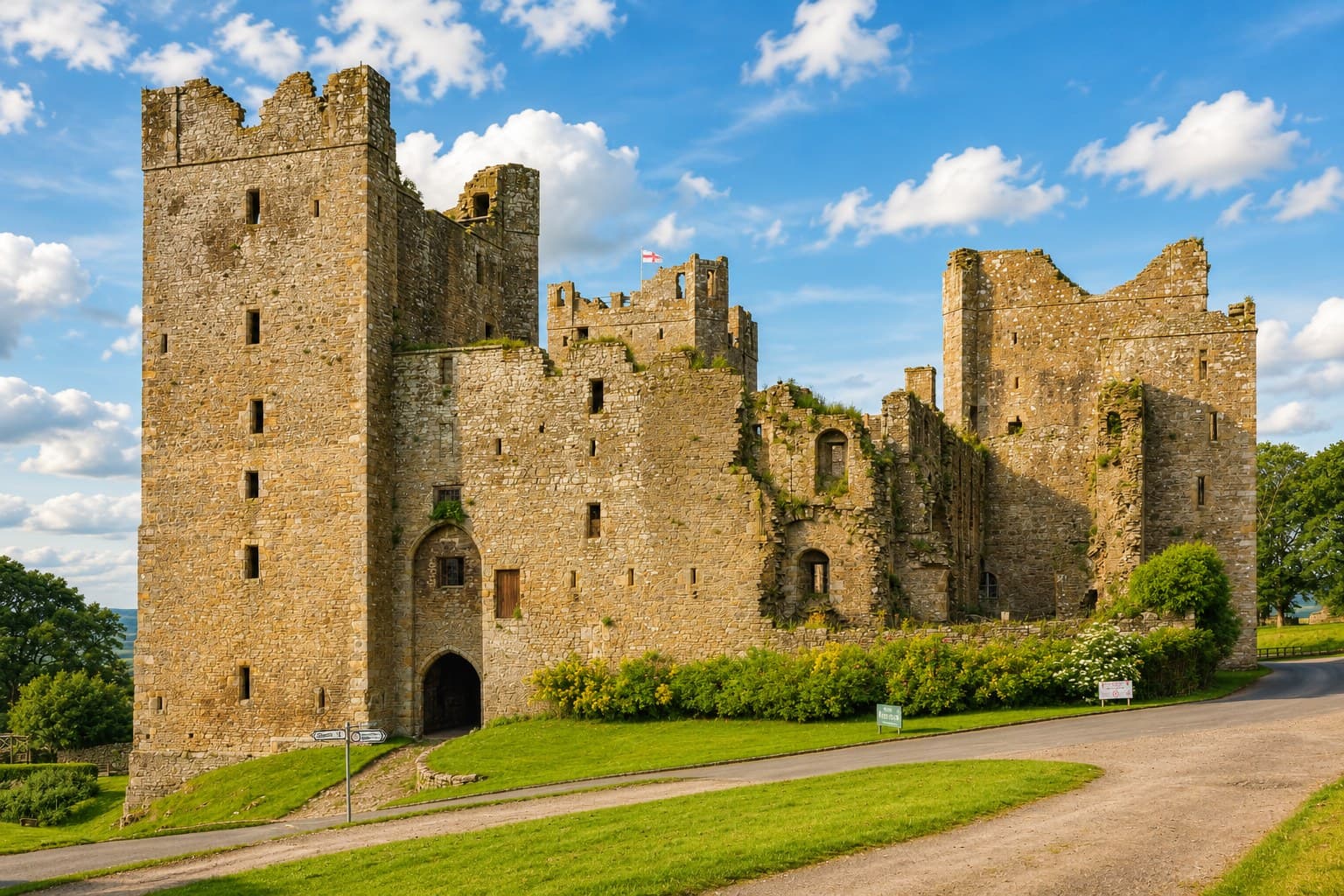
Bolton Castle was built under licence granted in 1379 to Richard Le Scrope, who rose to become Lord Chancellor of England, one of the most powerful positions in the medieval government. Construction of this scale and quality, a complete quadrangular castle with four corner towers, reflected Scrope's wealth and status, and the castle remained the principal seat of the Scrope family for generations afterwards.
Its most famous episode came in 1568, when Mary, Queen of Scots was held at Bolton Castle for around six months after fleeing Scotland following her forced abdication. She was technically a guest rather than a prisoner at this stage of her long captivity in England, but was nonetheless closely guarded, and the room traditionally identified as hers is still shown to visitors today as part of the castle's history.
Less than a century later, Bolton Castle found itself on the front line of the English Civil War. A Royalist garrison held it for the King through a long siege by Parliamentarian forces, finally surrendering in 1645 after running out of supplies. As with many Royalist strongholds, the castle was later partially demolished, or "slighted", on Parliament's orders to ensure it could never again be used as a military stronghold, leaving the partly ruined structure that survives today.
Remarkably, the castle has remained in the hands of descendants of the Scrope family, now the Orde-Powlett family (Lords Bolton), since it was built, a continuity stretching back well over 600 years. Today the estate includes a vineyard, planted in the 1970s as one of the most northerly commercial vineyards in England, alongside a walled garden, maze and the castle itself, open to visitors as a working historic estate rather than a purely managed heritage site.
SEE IT FOR YOURSELF
This history comes alive on the ground. Plan a visit with opening times, directions and what to see.