32 MINUTES FROM PATELEY BRIDGE
Jervaulx Abbey
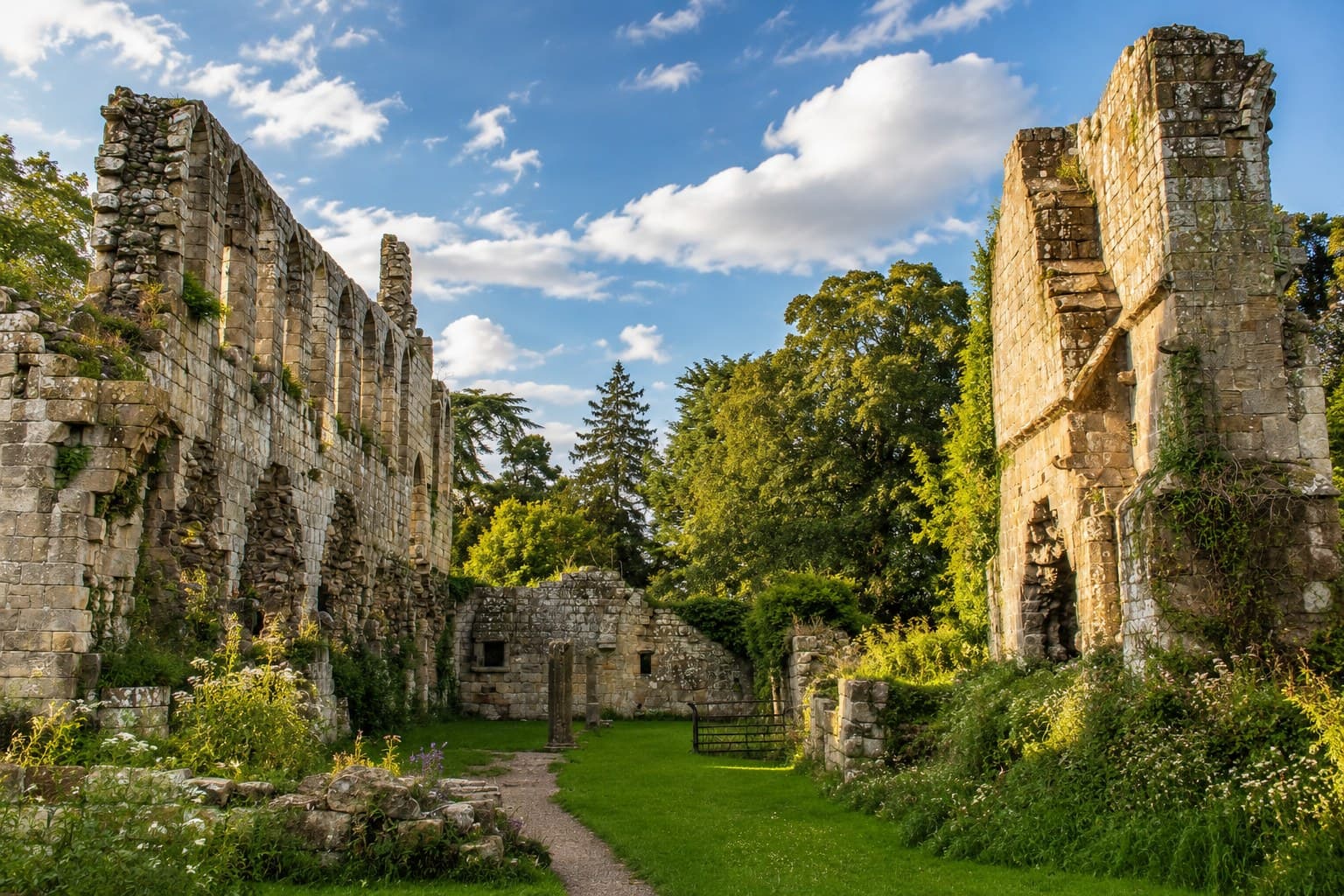
Jervaulx Abbey is what an abbey ruin looks like when it is left entirely alone. Privately owned and never restored, the 12th-century Cistercian ruins near Masham have settled gently into the landscape over the centuries, with wildflowers growing between the stones and sheep grazing freely among them. There is no ticket office, just an honesty box at the gate, and rarely a crowd.
Visit information
- Location
- Jervaulx Abbey, Ripon HG4 4PH
- From Pateley Bridge
- 32 minutes via Masham
- Open
- Daily, daylight hours
- Entry
- Honesty box - leave your entry fee in the box at the gate
- Dogs
- Welcome on leads, sheep graze freely among the ruins
- Facilities
- Small car park and an honesty-box tea hut in season
Left to settle naturally
Jervaulx Abbey was founded by Cistercian monks in 1156 and grew into one of the wealthiest abbeys in the north, known particularly for horse breeding and a hard cheese that some say was an early ancestor of Wensleydale cheese. It was dissolved in 1537 under Henry VIII, and its last abbot was executed for his part in the Pilgrimage of Grace.
Unlike Fountains or Rievaulx Abbey, which came under state or charitable care and were carefully conserved, Jervaulx has remained in private hands ever since the dissolution and was never tidied up. The result is a ruin that feels far more like a discovery than a heritage attraction.
The lack of restoration has been good for nature too. The grounds are now home to a wide range of wildflowers and grasses that have colonised the old stonework, giving Jervaulx its reputation as one of the prettiest ruins in Yorkshire come spring.
Making the most of your visit
An hour is plenty for most visitors, though it is easy to linger longer on a fine day, since there is no pressure to keep moving and nowhere else quite like it nearby. Sturdy shoes are sensible, as the ground can be uneven and is genuinely grazed by sheep.
There is a small tea hut on an honesty-box basis in season, but it is worth bringing your own supplies if you plan to make a longer stop. The nearby market town of Masham, home to the Theakston Brewery, makes a natural pairing for the rest of the day.
Because there is no formal visitor centre, this is a good choice if you prefer a quieter, more contemplative ruin to visit rather than a fully staffed attraction.
What to see
The Cloister and Church Ruins
Founded in 1156, Jervaulx was one of the great Cistercian abbeys of the north until its dissolution in 1537. Unlike many abbeys, it was never tidied up or restored, so the ruins sit exactly as centuries of weather and wildflowers have left them.
Free-Roaming Sheep
The ruins are grazed by sheep that wander freely among the fallen stones, giving Jervaulx a working, lived-in feel that is quite different from the manicured lawns of better-known abbeys nearby.
Wildflowers Among the Stones
Left unrestored, the site has become a haven for wildflowers, with orchids and other species growing up through the old walls and floor in spring and early summer. A favourite spot for anyone who prefers their ruins a little wild.
Honesty-Box Entry
There is no ticket office and no set hours beyond daylight. Visitors let themselves in through the gate and leave their entry fee in an honesty box, in keeping with the relaxed, unhurried feel of the place.
Near Masham, half an hour away
Jervaulx Abbey is about 32 minutes from Pateley Bridge via Masham. Remember to bring cash for the honesty box.